Working Lands and Habitat Side by Side
By: y: Gabriela Cervantes, Sr. Project Manager, Conservation & Restoration
Habitat restoration and agricultural production are often associated with a competition of land use, but many restoration projects can be integrated into working lands to benefit both our wildlife and agriculture. We have worked with many landowners to implement hedgerows in their fields as part of our pollinator habitat projects that not only create essential habitat for native species, but attract beneficial insects and predators to a farm as a form of natural pest control.
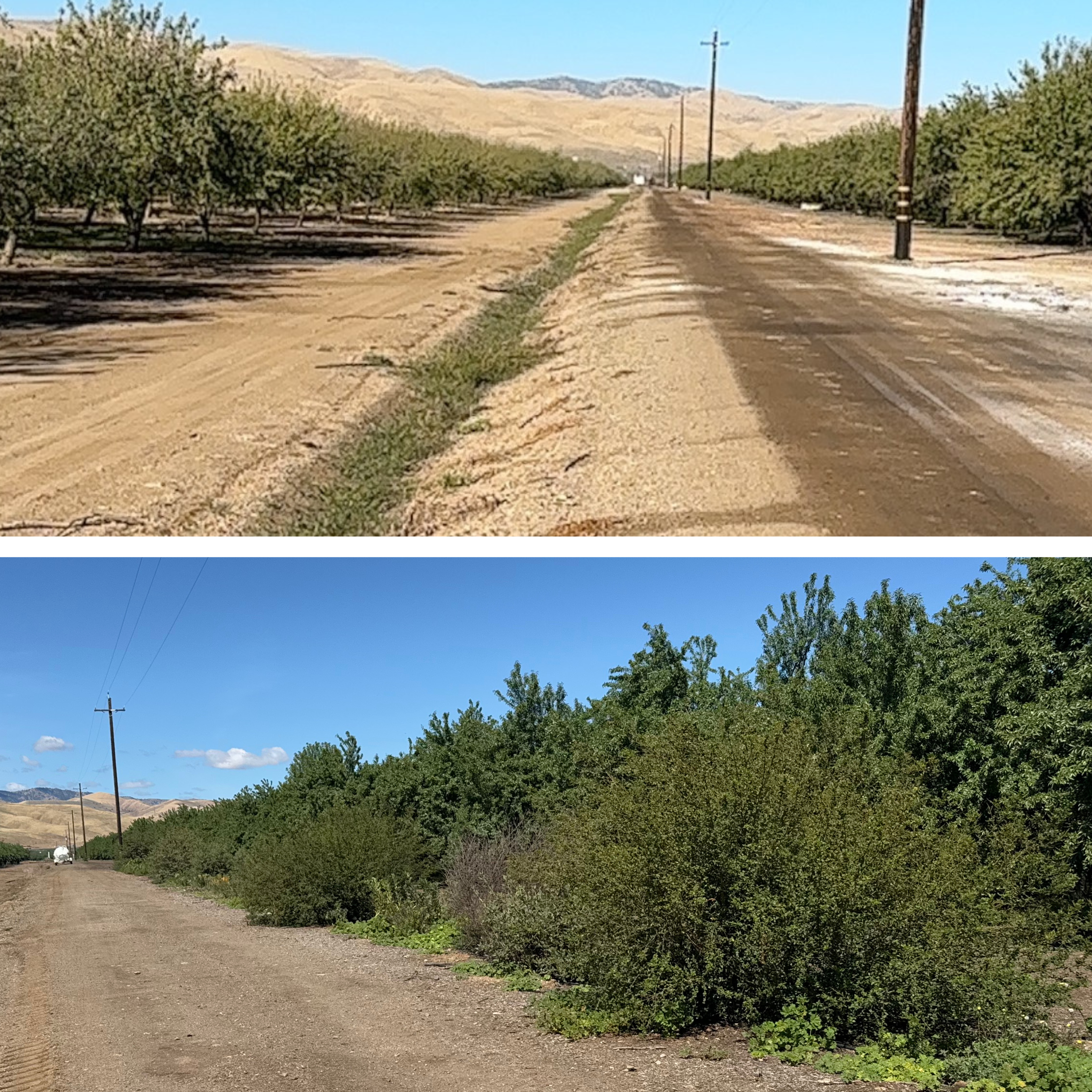
One of our projects with a local almond grower included a native hedgerow that was planted adjacent to their orchard. The location was strategically planned in collaboration with the landowner to prevent any interference with regular operations and equipment access, while still offering a space where the habitat can thrive without disturbance. Although these hedgerows require supplemental irrigation during establishment (2-3 years) before irrigation can be removed, the water investment that feeds into the hedgerow pays off into the whole farm system. Previously unused space transforms into habitat, restoring native California plants and native wildlife that enrich agricultural lands.
