Stewardship on Working Lands
By: Chris Yohannan, Director of Agricultural Conservation
In California’s Central Valley, stewardship on working lands is a daily practice shaped by farmers who rely on the land for both livelihood and legacy. Across the valley, farmers balance productivity with long-term care of soil, water, and habitat.
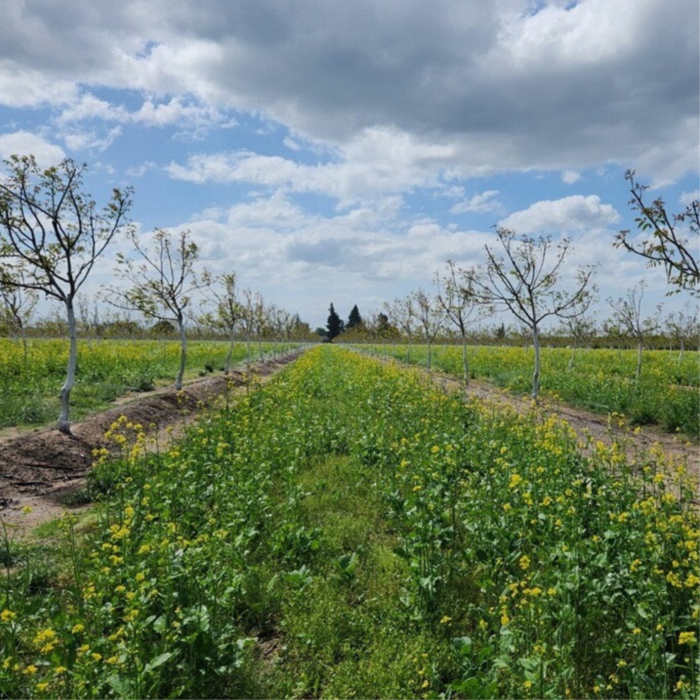
At its core, stewardship begins with the soil. Many Central Valley farmers, whether managing orchards or growing row crops, are adopting practices like planting cover crops to improve soil structure, increase organic matter, and enhance moisture retention. These covers help soil hold water longer and create a healthier environment for roots and beneficial organisms. Compost applications and reduced tillage further build soil health, allowing fields and orchards to remain productive while using fewer inputs over time.
This focus carries into water stewardship. Growers use tools like soil moisture sensors, drip irrigation, and evapotranspiration data to apply water more precisely. Healthier soils that retain moisture help farmers make better use of every drop, improving efficiency while maintaining crop quality across orchard and row crop operations.
Farmers are also integrating habitat into their operations while adopting proven practices that strengthen resilience. Hedgerows, pollinator plantings, and riparian buffers provide food and shelter for bees, birds, beneficial bugs, and butterflies, supporting biodiversity and natural pest control. Growers are also adopting improved orchard designs, drought-tolerant rootstocks, efficient crop rotations, and on-farm recycling of organic materials such as chipped prunings and crop residues to reduce waste and improve water use efficiency.
Stewardship is something everyone can be part of. Kids can help by taking small actions at home or school. Growing a small garden (even in a pot), reducing food waste, or watering a tree. These simple steps build habits that support the same values farmers practice every day.
Ultimately, stewardship on working lands in the Central Valley reflects a commitment to caring for resources while continuing to produce food. For farmers across the region, it is about ensuring their operations remain viable for the next generation.
