Resilient Habitats and Landscapes: Projects Making a Difference. A quick look at local restoration projects building resilience across Stanislaus County
By: Madison Taylor
A resilient habitat or landscape gives wildlife healthy, diverse places to live while also supporting clean water, air, and soil. For the ESRCD Restoration Department, a big goal is creating more of these places throughout Stanislaus County. Two of our main project types, native plant restoration and river restoration, each make a difference in their own landscapes.
Native plants that protect farmland
Soil erosion is a major issue in California, especially for farmers, who depend on healthy soil to grow their crops. Wind erosion strips that soil away. Our habitat restoration projects bring native plants into areas like cropland, where they act as windbreaks. Less wind reaching a field means more of the soil stays put, and that leads to more resilient crops.
These plantings also bring wildlife back. Native plants flower at specific times of year, drawing in native pollinators like native bees. Other wildlife, from birds to beneficial insects, uses these plantings too, adding biodiversity that would otherwise be missing from the area.
A home for young salmon
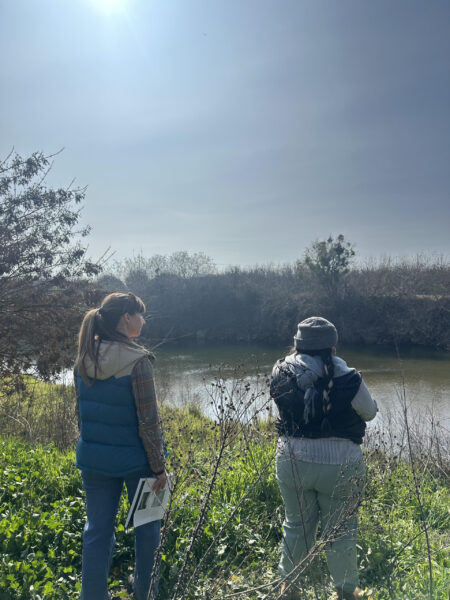
Our river restoration projects focus on creating habitat for juvenile salmon. Their numbers have dropped over time, and loss of habitat for young salmon is one notable cause. These projects give them a safe place to live during their early stages.
The benefits ripple outward. More salmon draw in other fish, the animals that feed on salmon, and other species that benefit from their presence. As activity grows, the whole river habitat becomes more resilient.
