Giving Habitat Back-Restoring Salmon Spawning Grounds
By: Gabriela Cervantes
Our Central Valley rivers are a few of the spawning hotspots for migrating populations of California native Chinook salmon. The salmon migrate from the ocean back to their home river to reproduce and spawn new populations every year. As an example, the Stanislaus River is home to many Chinook salmon, which can be seen returning to their spawning habitats during the fall!
Why is it important to give habitat back to native species? Chinook salmon are a keystone species, bringing in nutrients from the ocean to our local watersheds, and their population decline would significantly deteriorate the health of our river ecosystems. Habitat loss and climate change are some of the obstacles that threaten Chinook salmon populations. Migration is also a factor in salmon mortality, with many salmon dying before making it back to their home river. However, those who successfully complete their migration to the river may no longer find it in a suitable condition to spawn, contributing to the loss of critical ancestral spawning grounds.
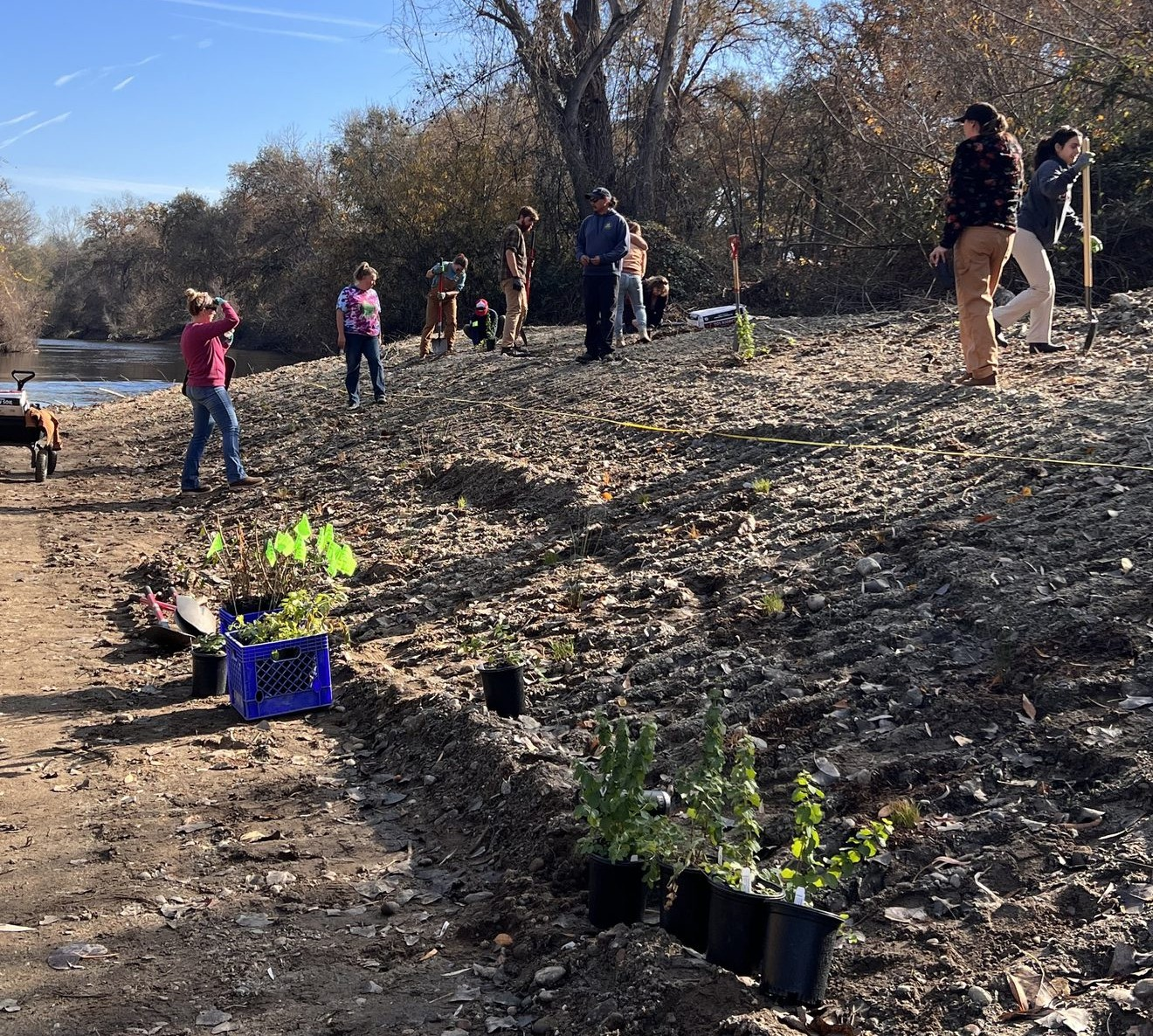
At ESRCD, our restoration team, along with our partners, works on river projects to restore salmon spawning habitat for Central Valley Chinook salmon populations. One of our sites, at which some of this restoration work has been completed, is Stanley Wakefield Wilderness Area, which provides spawning grounds and juvenile salmonid habitat in the river. Currently, we are working towards extending these efforts in Caswell Memorial State Park to restore more habitat for the local populations of Chinook salmon.
For more information on our Restoration department or to learn how you can contribute to our efforts, please reach out to Veronica Reece, our Operations Director, at veronica@eaststanrcd.org
