More Than a Garden or Cooking Class: What Students Gain from FEAST
By: Alix Clausen, Director of Education & Engagement
What happens when a student doesn’t just learn about where food comes from, but gets to plant it, care for it, harvest it, and turn it into something they can actually eat?
That is the idea behind FEAST: Food Education & Ag Stewardship Training, ESRCD’s newly combined Jr. Farmer and Jr. Chef programs. FEAST connects the garden, kitchen, and classroom to give students a hands-on understanding of the food system from soil to plate.
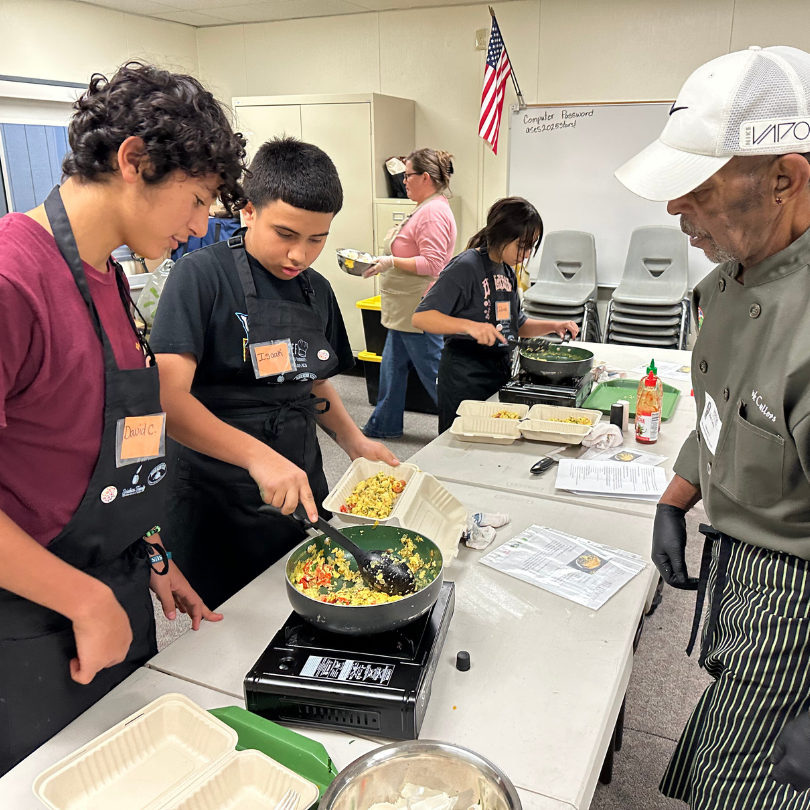
Through FEAST, students grow, harvest, cook, and discover. They learn about soil health and conservation while growing food, experience the excitement of harvesting something they helped care for, and build practical kitchen skills as they prepare fresh recipes.
And those experiences matter. Research shows that garden, nutrition, and cooking education can increase students’ vegetable intake and support academic achievement. School garden programs can also help engage students in learning, with 39% of educators in one school garden survey reporting better student attendance specifically on garden class days.
But some of the most meaningful outcomes are harder to measure. It’s the student willing to taste a vegetable because they grew it themselves. The confidence that comes from preparing a recipe for the first time and the realization that healthy soil, agriculture, conservation, and the food on their plate are all connected.
FEAST builds on what students loved about Jr. Farmer and Jr. Chef while giving them a more complete experience and practical knowledge they can carry home.
