Students in the Field: Learning Through Restoration
By: Madison Taylor, Restoration Project Manager
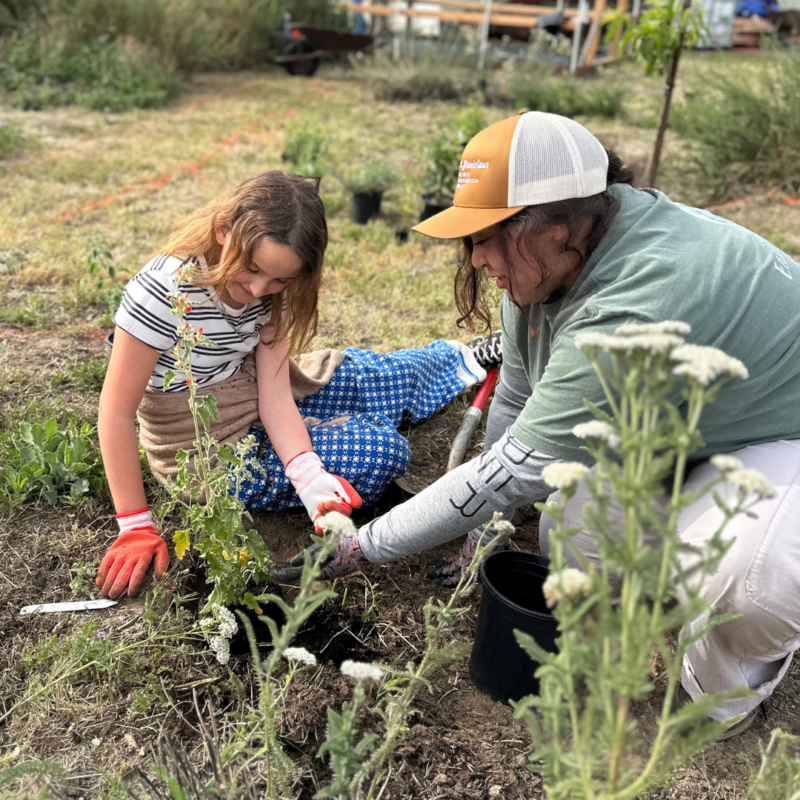
For students, learning about native plants and pollinators is often most meaningful when it happens outside the classroom. By working alongside ESRCD staff during restoration projects, students have the opportunity to take an active role in creating and caring for native habitat. These experiences bring concepts like biodiversity and conservation to life while helping students understand the impact they can have on their local environment.
When students learn about habitats, they begin to see how the plants and animals around them are connected. Native plants are an important part of that system, providing resources for pollinators like bees, butterflies, moths, flies, and wasps. In turn, pollinators help plants reproduce and support many of the crops that bring food to our tables. Understanding these connections helps students see why protecting native plants and pollinators matters to both wildlife and people.
Depending on their age, students may be learning about pollinators and native plants, but many do not know how important it is to have a variety of habitats. One of our restoration goals is to make sure native plants are spread throughout Stanislaus County. We can do this successfully through the Wildlife Conservation Board (WCB) grant, where we are able to plant and monitor native plants on public and private lands. Some of the receiving locations are schools throughout Stanislaus County. On many occasions, the students have helped implement and take care of the native plants for many seasons. Through this experience, the students have been able to learn much more than how to take care of plants. We have also held several habitat and native species workshops and volunteer events, such as Love Modesto, where the younger generations had the opportunity to get involved and become more educated on native habitats, even getting to plant some themselves! We recognize that it is incredibly important to educate the youth and get them as involved with their habitats as much as possible. Through hands-on work, many students have seen how native plants introduce several new species to their areas, and they have gained an understanding and appreciation of how native plants can create new habitats and support a multitude of beneficial organisms.
