Repairing Native Habitat
By: Gabriela Cervantes, Sr. Project Manager, Conservation & Restoration
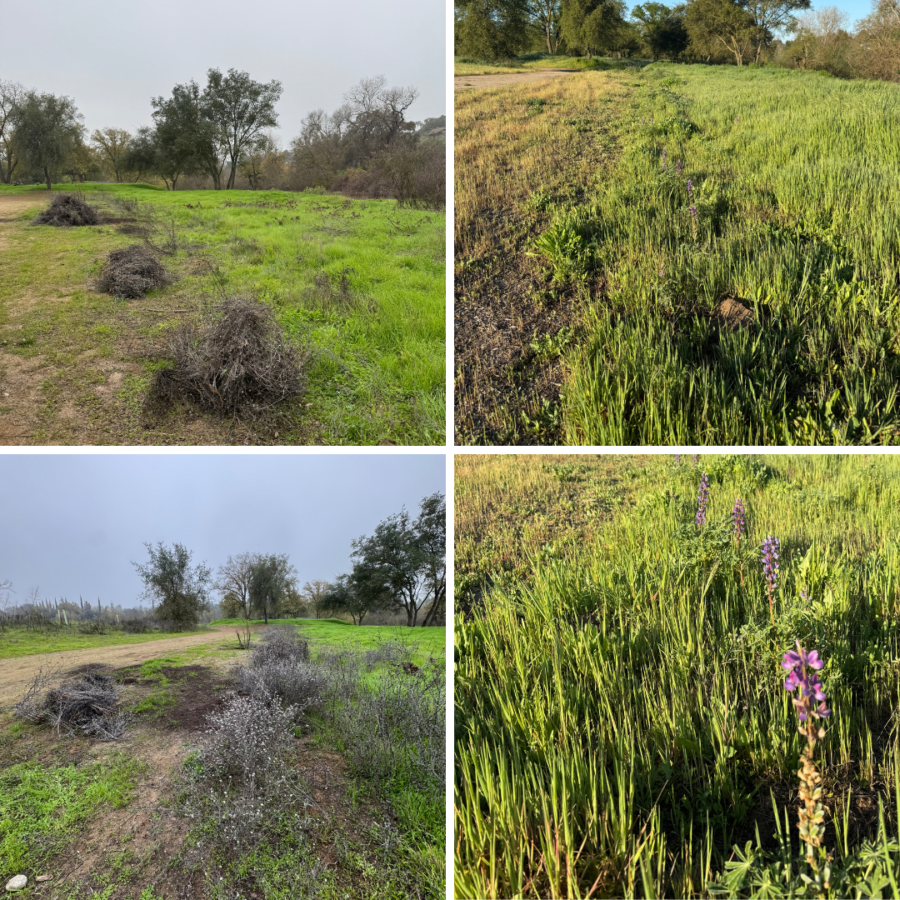
This past December, our restoration team removed an infestation of invasive Yellow starthistle along a path over at the Stanley Wakefield Wilderness Area. This plant had created a dense monoculture of thistle, outcompeting any native plants in that area. Aside from being a physical hazard to any wandering hikers and animals with its sharp thorns, invasive species such as Yellow starthistle spread quickly and deteriorate soil health. When these populations are unmanaged, they cause detrimental ecological impacts as they take up essential resources such as water and soil nutrients for native plants, and restrict biodiversity in habitats.
As spring began, we returned to the site and were delighted to see that the same area that was once infested by Yellow Starthistle was growing beautiful native Lupine! The work done to remove the invasive thistle had definitely been rewarded. By removing the invasive plants, native species have an opportunity to emerge and successfully recover areas meant for them. These plants greatly contribute to our ecosystems by supporting and providing habitat for pollinators, wildlife, and improving our natural landscapes. Targeting invasive plant infestations can be challenging, but it is a critical step in restoring our land and giving natural biodiversity a chance to thrive!
